
MAR SABA MONASTERY
This Church was dedicated to St. Nicholas and established in 491 AD. The Lord has revealed this ...

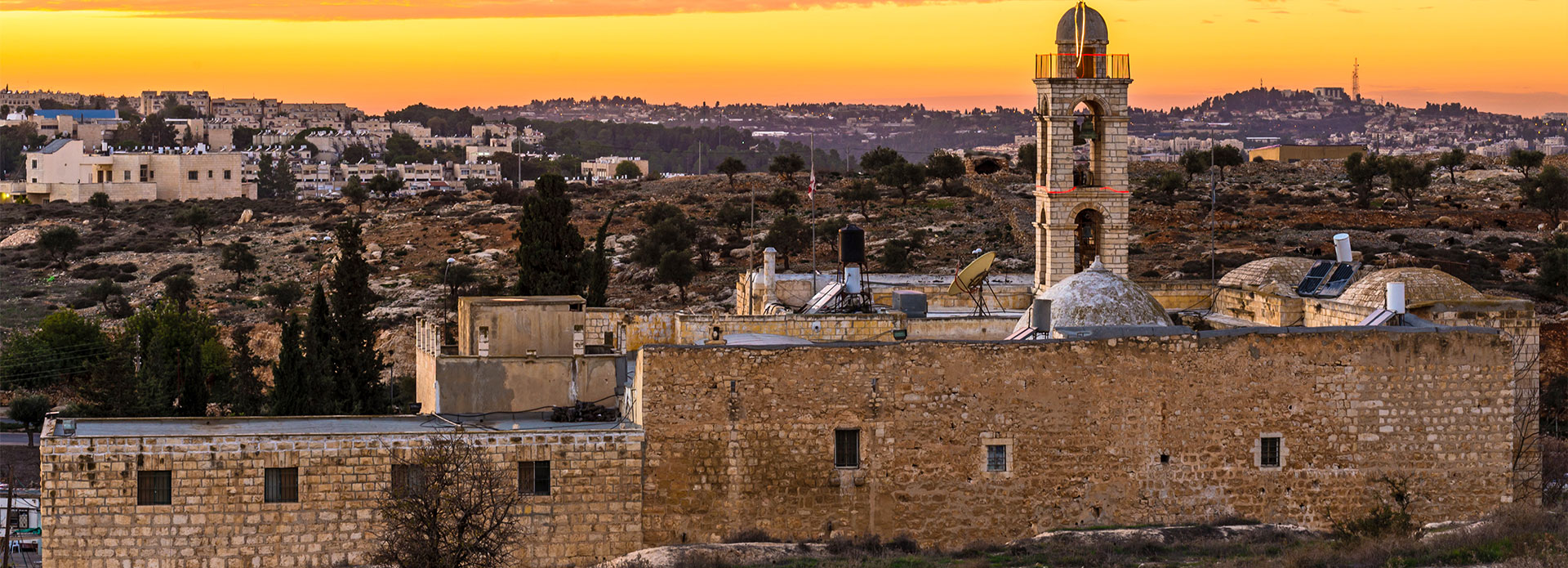
The Monastery was first built in the Byzantine period, but it was then named after Saint Anastasius. Like many other monasteries, it was rampaged in the Persian invasion in 614 CE and later abandoned. Centuries later, it was rebuilt, and named after Elias, Jerusalem’s patriarch, who died in 1345. However, by local tradition, the Monastery is named after the Biblical Prophet Elijah, whose name in Arabic is “Elias”. Elijah was known for his battles against foreign worship. But after slaughtering the priest of Ba’al on the Carmel, he had to escape to Mount Horeb, fleeing Queen Jezebel, who supported foreign cults. By local tradition, the Monastery is at the spot where Elijah rested during his escape.
The Monastery and its Church are open to the public. Both the Church and the restaurant on its compound are decorated with Byzantine style paintings presenting Biblical themes, especially those relating to Prophet Elijah. The Church celebrates Elijah’s ascension to the heavens every summer, as described in 2 Kings 2.
This Church was dedicated to St. Nicholas and established in 491 AD. The Lord has revealed this ...

The Monastery reached its golden age between the fifth and seventh centuries, where it used to ...

Was built over the Grotto, which is believed to be the place where St. Nicholas spent a part of his ...


